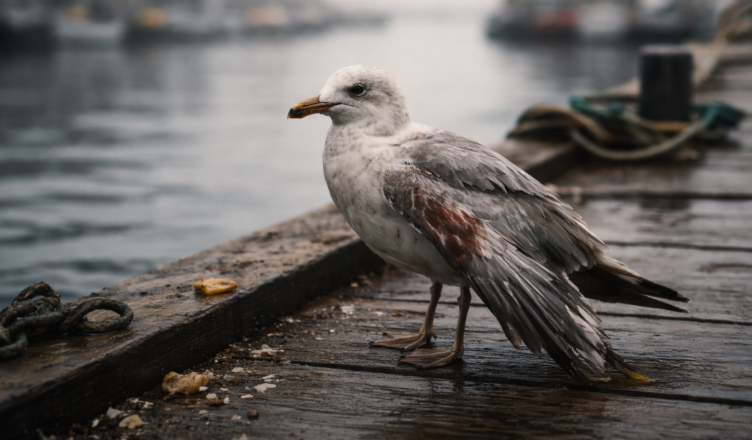
The gull stood at the edge of the pier long after the others had gone.
Morning came loud — engines coughing awake, ropes slapping wood, fishermen laughing — but she stayed exactly where the tide left her. One wing hung lower than the other, feathers bent and darkened with old blood. Every time she tried to lift it, her body tilted sideways, balance lost before hope could rise.
She had been there all night.
People stepped around her like she was part of the scenery. A broken thing belonged to the background. Children pointed. Someone tossed a crust of bread that landed just out of reach.
She didn’t move for it.
When the volunteer arrived, the gull didn’t scream or fight.
That was the worst part.
Healthy birds fought with everything they had — sharp beaks, wild wings, fury. This one only watched. Her eye followed the hands that reached toward her, calm in a way that felt like surrender rather than trust.
The wing was worse than it looked.
The bone had broken days ago. Maybe longer. Each movement had ground it down further, sharp edges sawing softly at muscle that never got a chance to heal. Infection had set in, slow and quiet, the way things do when pain is ignored.
They wrapped her carefully. She never resisted.
At the clinic, they spoke in low voices. Words like damage and chance and quality of life floated just out of reach. The wing would never fly again. Even if it healed, it would always drag, always ache. In the wild, a gull that couldn’t fly was already gone.
The volunteer sat with her while they decided.
The gull’s chest rose and fell, steady despite everything. She blinked once. Then again. Her good wing twitched weakly, as if remembering what it was for.
“She didn’t starve,” the volunteer said quietly. “She stayed.”
They chose pain relief. Warmth. Hands that didn’t hurt.
When it was time, the gull didn’t struggle.
She rested her head against the towel, eye half-closed, body finally still in a way it hadn’t been for days. Outside, the sea kept moving. Other gulls cried overhead, sharp and bright and alive.
She never saw them again.
But she didn’t die alone.
And for a bird who had spent days standing where no one stopped long enough to help, that mattered more than flight ever could.