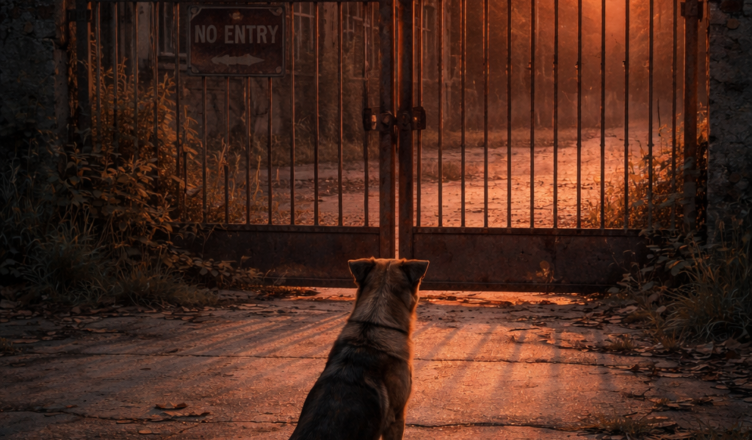
No one remembered when the factory closed.
The windows were broken now, the metal gate rusted shut, weeds pushing through cracks in the concrete. Trucks no longer came. Voices no longer echoed between the walls. Yet every evening, just before sunset, a dog appeared.
He was medium-sized, brown with black markings along his back, and he always sat in the exact same spot—three steps from the gate, facing the road. Never barking. Never wandering far. Just waiting.
People who passed by created their own explanations.
“He belonged to a guard,” some said.
“His owner worked there,” others guessed.
“He doesn’t know they’re never coming back.”
What everyone agreed on was this: the dog waited like time itself had paused for him.
A Silent Routine
Workers from nearby shops sometimes left scraps of bread or bones. The dog ate only after they walked away. If anyone tried to touch him, he retreated just out of reach—not aggressive, just afraid.
His right leg dragged slightly when he walked.
Winter arrived early that year. Snow collected along the base of the gate. The dog’s fur grew dull, his movements slower, but still he came. Every night. Same place. Same direction. Same hope.
That was when Lilit noticed him.
She passed the factory daily on her way home from work. At first, she only saw him from afar. Then she noticed the limp. Then the way he shivered long after sunset.
One evening, instead of walking past, she stopped.
The First Step
Lilit sat down on the cold pavement several meters away. She didn’t call out. Didn’t move closer. She simply spoke—quietly, calmly—about nothing important at all. About the weather. About her long day. About how tired she felt.
The dog lifted his head.
Minutes passed. Then more. Cars drove by. The sky darkened.
Finally, the dog stood.
One cautious step.
Then another.
When he reached her, he didn’t wag his tail. He didn’t lick her hand. He simply leaned his weight against her leg and sighed—a deep, tired sound, as if he had been holding his breath for years.
Lilit felt tears she didn’t expect.
Healing What Time Couldn’t
At the veterinary clinic, they learned the truth. The dog had once broken his leg. It healed badly, untreated, leaving him in constant pain. He had survived—but barely.
Surgery was expensive. Recovery would take weeks.
Lilit didn’t hesitate.
She named him Argo.
The first nights at her apartment, Argo slept lightly, waking at every sound. He paced the hallway, confused, sometimes sitting by the door as if unsure where he belonged.
But slowly, things changed.
Pain medication helped. The stitches healed. Physical therapy followed. One morning, Argo tried to run—and stopped himself, surprised by how little it hurt.
A week later, he ran again. This time, he didn’t stop.
A New Place to Wait
Months passed.
The factory gate rusted further. Snow melted. Spring came.
Argo never returned.
Instead, every evening at sunset, he sat by a different door—the front door of Lilit’s apartment. Not because he was afraid of being left again, but because he liked greeting her when she came home.
His tail wagged now. His eyes were bright.
He still remembered waiting.
But he had learned something better.
Some gates never open.
Some doors always do.