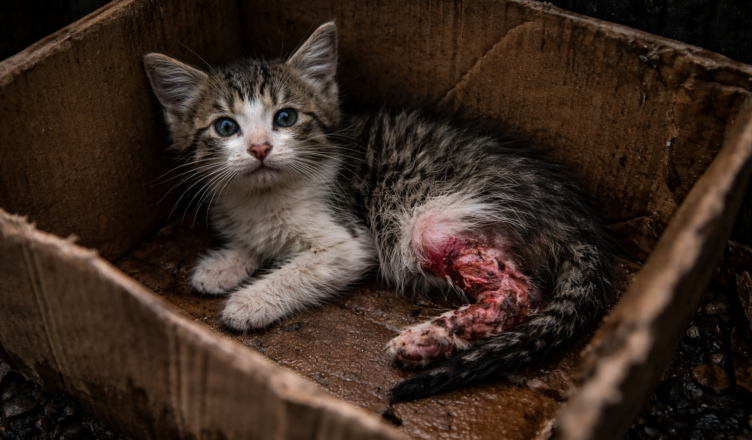
The kitten was inside a cardboard box that had softened with rain.
It sat behind the grocery store dumpsters, tucked just far enough out of sight to pretend it was hidden. The sides bowed inward, soaked and sagging, the bottom torn where water had pooled through the night. Inside, the kitten lay pressed into one corner, body small and rigid, fur clumped and cold.
One back leg was wrong.
Bent sharply beneath him, swollen to twice its size, the skin split where bone had pushed too close to the surface. The box was marked with thin streaks of blood, smeared where he’d tried to turn around and couldn’t.
He didn’t cry anymore.
When the woman knelt, the kitten lifted his head with effort that didn’t match his size. His mouth opened once. A sound came out — thin, broken, almost embarrassed by its own weakness.
She reached in slowly.
He didn’t pull away. Didn’t hiss. His body leaned into her fingers as if touch itself was something he’d been rationing, afraid it might run out.
At the clinic, they cleaned the leg gently. Too gently to change the truth.
The break was severe. Days old. Infection already creeping in, quiet and patient. Even with surgery, even with everything done right, his chances were small. And if he lived, the pain would never fully leave him. His body would remember the box. The cold. The waiting.
They wrapped him in a towel that smelled like laundry soap and warmth.
He relaxed immediately.
The vet listened to his heart for a long time. Longer than necessary. Then she nodded once.
When it was over, the kitten’s body was still warm, curled as if he’d finally found a place soft enough to rest. His leg no longer hurt. Nothing hurt anymore.
Later, someone threw the box away.
It collapsed completely when it hit the trash, cardboard giving up at last. No one noticed. No one wondered what had been inside.
But for a few hours, that box had held a small life that waited as long as it could.
And that mattered — even if the world never knew it had been asked to care.